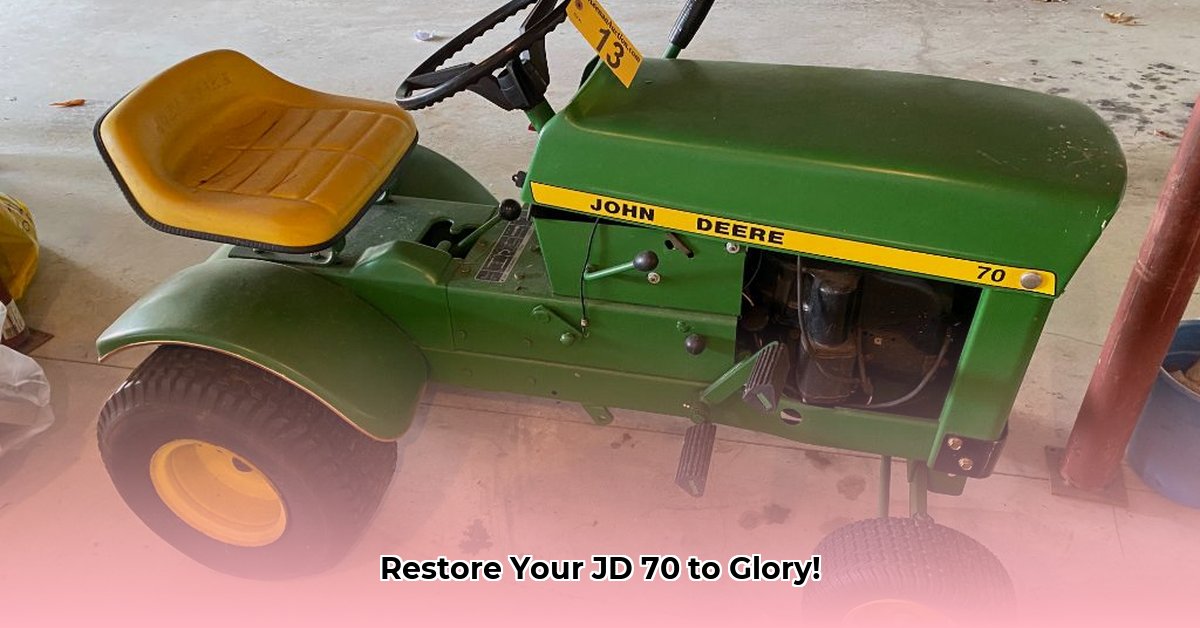
The John Deere 70 lawn tractor: a name that evokes images of simpler times and robust, reliable machinery. This isn't just a mower; it's a piece of history, a testament to classic engineering, and a rewarding project for enthusiasts. Whether you're a seasoned collector, a weekend mechanic, or simply curious about this iconic machine, this comprehensive guide provides everything you need to know about owning and restoring a JD 70. For more restoration guides, check out this helpful resource: restoration guides.
A Blast from the Past: History of the John Deere 70
Manufactured between 1970 and 1974, the JD 70 represents a bygone era of lawn care. Its straightforward design, devoid of the bells and whistles of modern tractors, is precisely its charm. Built for dependable performance rather than breakneck speed, the JD 70 reflects the simpler engineering principles of its time. Its intuitive mechanics make it relatively easy to maintain and repair, appealing to those who appreciate a hands-on approach to machinery. This simplicity, however, doesn't diminish its character; for many, the JD 70 embodies a classic, timeless aesthetic, a coveted piece of John Deere legacy.
Under the Hood: The Tecumseh Engine and Performance
Powering the JD 70 is a 7-horsepower Tecumseh engine. While not a powerhouse by today's standards, this engine provided respectable power for its time, easily handling most mowing tasks. Don't expect high speeds; the top speed is approximately 5 mph (8 km/h). The focus was on steadfast reliability and consistent performance. While its speed may pale in comparison to modern machines, its ability to tackle diverse tasks with various attachments remains a significant draw for its users. This focus on reliable functionality, rather than speed, highlights a different design philosophy prevalent in that era.
Maintaining Your JD 70: A Practical Maintenance Guide
Owning a classic tractor requires a commitment to regular maintenance. This is less a chore and more a rewarding aspect of ownership. Here's a breakdown of essential maintenance tasks:
Oil Changes: Regular oil changes (every 25 hours of use, or as recommended in your owner's manual) are paramount for engine lubrication and longevity. Think of it as vital "lifeblood" for your engine.
Air Filter Maintenance: A clean air filter ensures optimal engine performance. Clean or replace the filter regularly (every 50 hours or as needed) to prevent performance issues.
Spark Plug Inspection: A functioning spark plug is essential for reliable starts. Inspect and replace the spark plug (typically every 100 hours) as needed. This seemingly simple step can prevent significant headaches.
Blade Sharpening: Sharp blades are crucial for a clean cut and optimal performance. Sharpen your blades regularly (at least once a season) to maintain efficiency and prevent uneven mowing.
General Inspections: Regular visual inspections of all components are critical for early detection and prevention of more significant issues.
Beyond Mowing: Versatile Attachments and Uses
The JD 70's versatility extends far beyond mowing. A range of attachments transforms it into a year-round workhorse. From snow blowers for winter use to tillers for garden prep, its adaptability adds to its appeal. These attachments enhance the tractor's usefulness and provide a rewarding experience exploring its various capabilities.
The Parts Puzzle: Sourcing Components for Your JD 70
Locating parts for a vintage machine can be challenging, but not impossible. Several avenues exist:
John Deere Dealers: While not always stocked, dealers may have access to parts diagrams and catalogs or can direct you towards alternative sources.
Online Retailers: Websites specializing in vintage tractor parts, along with marketplaces like eBay, offer a wider selection. Always verify compatibility before purchasing.
Used Tractor Parts Dealers: These dealers often salvage parts from older machines, sometimes offering significant cost savings.
Online Communities: Forums and groups dedicated to vintage John Deere tractors provide invaluable resources, connecting you with experienced owners who share parts information and advice.
Restoring Your JD 70: A Rewarding Project
Restoring a JD 70 is a journey that demands patience and mechanical aptitude. The satisfaction of bringing a classic machine back to life is immeasurable. The process itself—meticulous cleaning, repair, and refurbishment—can be as enjoyable as the final result. Many owners find the restoration process as rewarding as operating the finished machine.
The JD 70: Weighing the Pros and Cons
Before purchasing, consider the following:
Pros:
- Durable and robust construction.
- Reliable Tecumseh engine (when properly maintained).
- Versatility through available attachments.
- Relatively simple and understandable mechanics.
- A piece of John Deere history.
Cons:
- Parts availability can be challenging and/or expensive.
- Relatively slow compared to modern tractors.
- Requires regular maintenance and potential repairs.
- Restoration can be time-consuming and costly.
- Limited safety features compared to modern standards.
Joining the Community: Connecting with Fellow Enthusiasts
Connecting with fellow JD 70 owners through online forums and clubs fosters a supportive network where you can share experiences, learn from others, and access valuable resources. This community aspect significantly enhances the ownership experience.
Final Thoughts: A Classic Machine for a Modern Era
The JD 70 represents more than just a lawn tractor; it's a piece of Americana, a testament to durable engineering, and a rewarding restoration project. While it demands effort and attention, the sense of accomplishment and connection to the past make owning and restoring a JD 70 a uniquely satisfying experience. Are you ready to embrace the challenge?